
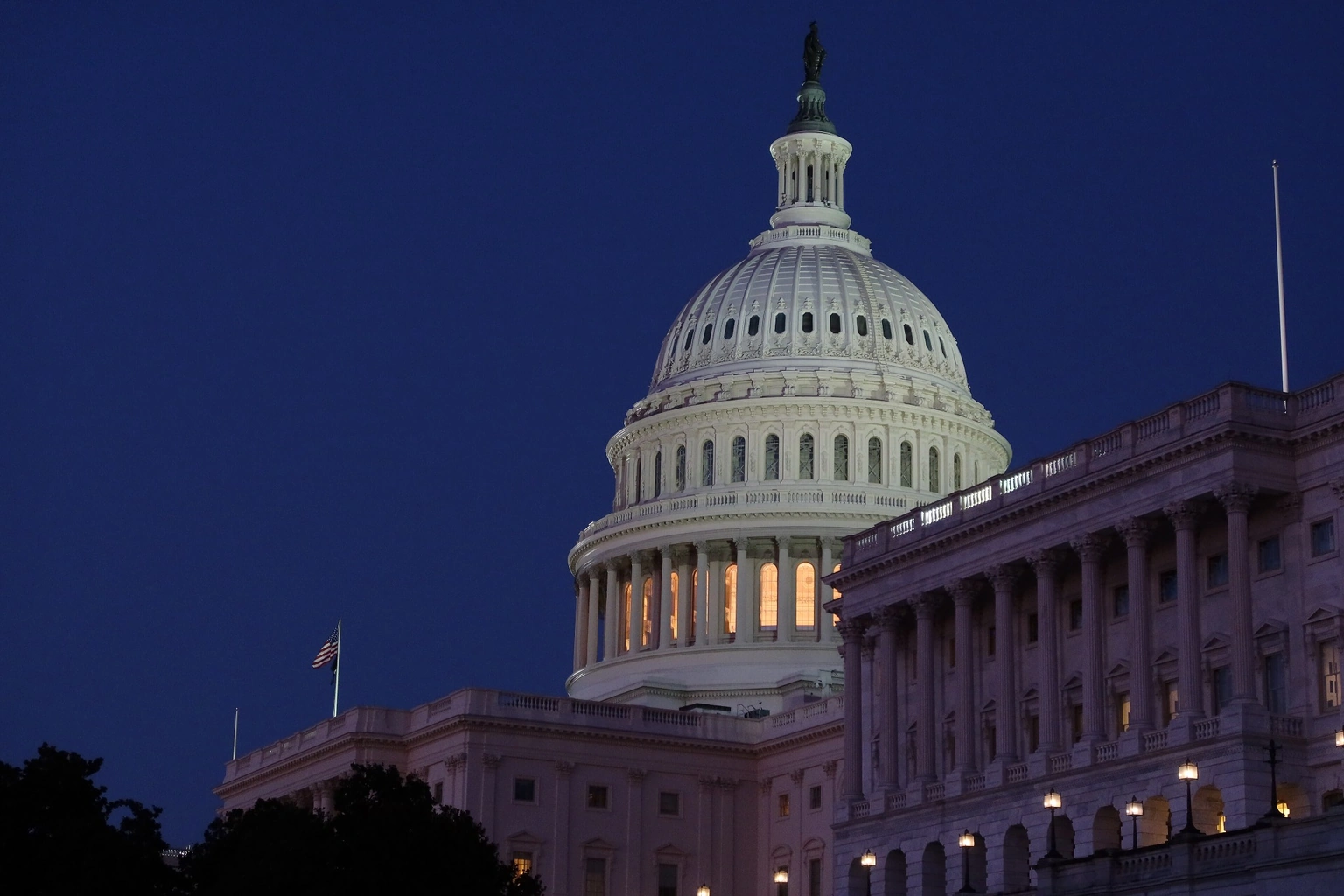
We welcome the outcome of the 2026 midterm elections. Voters gave Democrats control of the next Congress, creating an opportunity to challenge this administration’s priorities and demand something better.
The Big Beautiful Bill belongs at the center of that reckoning. Its supporters promised greater investment, higher wages, and broader prosperity. While promoting the legislation, the White House presented tax advantages for business and investment as a path toward better lives for workers.
That is the familiar trickle-down promise: give businesses and investors favorable treatment, and the benefits will eventually reach the people doing the work.
But the election also exposed something that deserves attention: the extraordinary amount of money available to influence who governs this country.
The Brennan Center reported that the 40 largest donors and donor entities contributed more than $2.4 billion through mid-October. Its analysis attributed $483 million to Elon Musk and one of his companies, benefiting Republicans.
That scale of political spending is disgraceful against the backdrop of America’s unmet needs.
Those contributions demonstrate an enormous capacity to spend. Americans are entitled to demand that people with that capacity contribute more toward sustaining the country that supports their success.
Look at the Bill’s Ledger
Compared with its January 2025 baseline, the Congressional Budget Office projected that the Big Beautiful Bill would reduce federal revenues by $4.5 trillion and direct spending by $1.1 trillion over 2025–2034, increasing the deficit by approximately $3.4 trillion.
Make this make sense.
Congress chose LESS REVENUE, CUTS TO ESSENTIAL SUPPORT, AND MORE BORROWING.
What household builds stability by taking in less, cutting the basics, and borrowing more?
And what was supposed to be so beautiful about that bill?
CBO’s distributional analysis projected that the lowest-income tenth of households would lose approximately $1,200 in annual resources, on average, over 2026–2034, primarily through Medicaid and food-assistance reductions. The highest-income tenth would gain approximately $13,600 annually, primarily through lower taxes. Those figures are in 2025 dollars, relative to CBO’s January baseline.
A law projected to leave the poorest households with less deserves a direct challenge from anyone promising to lift them up.
Count the Household Costs
Working families deserve to see what the Big Beautiful Bill gives, what it takes away, and what its promises mean against the bills they actually pay.
For a family paying $400 a week for childcare, the annual expense is $20,800. In 2026, the child and dependent care credit for one qualifying person is at most $1,500, depending on eligibility and federal income tax owed. That particular credit is nonrefundable and covers only a fraction of this illustrative family’s childcare expense.
Families receiving childcare assistance also lost a federal protection. Biden’s 2024 rule required copayments under the federal Child Care and Development Fund program to be capped at 7% of family income. Through a separate rule effective July 13, 2026, the Trump administration rescinded that requirement. States can retain the cap, but Washington withdrew the guarantee.
Healthcare deserves the same scrutiny. CBO projected that the Big Beautiful Bill’s coverage changes would leave 10 million more people uninsured in 2034 than under its pre-law baseline. That is a projection of the law’s effects, not a count of people who have already lost coverage.
A separate 2025 Cassidy–Crapo proposal offered eligible adults $1,000 or $1,500 annually in health savings account contributions for 2026 and 2027, depending on age. It failed a Senate procedural vote that December.
For comparison, KFF reported an average individual bronze-plan deductible of $7,476 for 2026. Neither proposed annual contribution would cover that average deductible.
A contribution is not comprehensive protection against the cost of getting sick.
Americans should judge relief by the security it delivers after the costs and losses are counted.
Workers Need Purchasing Power
A raise means less when prices climb faster.
BLS reported that average hourly earnings on private nonfarm payrolls, adjusted for inflation, fell 0.7% between September 2025 and September 2026. Average hourly pay bought less than it had a year earlier.
That is the household reality against which promises of prosperity must be measured.
Separately from the Big Beautiful Bill, Trump’s March 14, 2025, executive order revoked the federal contractor wage order that provided a $17.75 hourly minimum in 2025. The Labor Department announced that it would stop enforcing that order.
The administration withdrew a specific wage protection while promoting tax policy as a route to workers’ advancement.
Employees should not have to rely on a corporation’s generosity to discover whether prosperity will reach their paycheck.
The people producing the value deserve a dependable share of it.
A Country Worth Investing In
America’s infrastructure needs are documented.
The American Society of Civil Engineers gave the country’s infrastructure an overall C in 2025. Roads, energy, and school infrastructure each received a D+.
These systems support everyday life and business: electricity that keeps equipment running, roads that carry deliveries, connections that let students learn, and buildings where children spend their school days.
Medical research, cancer treatment, affordable energy, and dependable transportation also deserve sustained investment.
The Big Beautiful Bill’s revenue reductions should be examined alongside those needs. Giving up public revenue has consequences for what the country can finance and how much it must borrow.
Private enterprise benefits from public investment. NASA, for example, awarded SpaceX a lunar-lander contract valued at $2.89 billion in 2021. Government purchasing can create substantial commercial opportunities.
The businesses and fortunes supported by that economic system should help maintain it.
What Congress Should Put on the Table
Democrats should make replacing the harmful provisions of the Big Beautiful Bill an early priority. Put forward a realistic tax plan. Restore healthcare and food assistance the law reduced. Protect children’s medical care, childcare, school meals, medical research, and services older Americans rely on.
A fair tax system should recognize work, ambition, and the risks involved in building a business. It should also require the wealthiest to contribute fairly. Their businesses benefit from public infrastructure, educated workers, government contracts, and the legal system that protects their investments.
They are part of the system. They should help sustain it.
That responsibility extends to business incentives offered by federal, state, and local governments. When tax relief is awarded in exchange for promised jobs, what happens if a company replaces those positions with artificial intelligence? Should the employment subsidy continue?
Officials should enforce existing commitments, recover benefits where agreements require it, and write future agreements around measurable results. An incentive justified by jobs should be judged by the jobs it delivers.
Small businesses deserve meaningful access to public contracts, too. Federal policy already establishes a government-wide small-business prime-contracting goal of 23% of eligible dollars. A contract awarded to a capable local business can help support another employee, another supplier, and another opportunity within a community.
Public purchasing should deliver reliable services while giving smaller firms a fair chance to compete. Company size should never substitute for evidence of public value.
The same scrutiny belongs inside the Democratic Party. Lawmakers accepting support from corporate PACs and wealthy business donors owe voters an answer: when donor preferences conflict with the public interest, whose priorities will govern?
Democratic donors should face the same standards Democrats demand of Republican donors.
Democrats have already introduced legislation to repeal the Big Beautiful Bill’s healthcare changes. The next Congress should build on that work and present a replacement Americans can examine.
A congressional majority does not bypass a presidential veto; overriding one requires two-thirds in both chambers. We expect presidential resistance. That should not stop the work.
Introduce the legislation. Get it scored. Hold hearings. Demand recorded votes.
This president and his Republican allies have spent years saying “America First.” A serious replacement would give them an opportunity to demonstrate what that means: restoring protection for families, requiring a fair contribution from wealth, and investing in the country.
If Republicans oppose it, let them explain their votes. If the president vetoes it, make him explain that choice to the people it would help.
Working Americans help sustain this country every day. They deserve a government that asks the same responsibility of those with the greatest capacity to contribute.
Americans have supplied the votes. Now let the public record show who is willing to put them first.
The Sunday Dinner Question
When public support helps build private wealth, what should Americans receive in return—and what should Congress do to secure it?
Sources & References (59)
Sources & References
Research checked November 8, 2026. AI output is not a source. Preserve the numbering if the article retains the bracketed references.
1. The Associated Press — Calling control of Congress in the 2026 midterm elections.
https://www.ap.org/the-definitive-source/behind-the-news/calling-control-of-congress-in-the-2026-midterm-elections/
Supports: Democratic control of the incoming House and Senate; the new Congress takes office in January 2027.
2. White House Council of Economic Advisers — The One Big Beautiful Bill: Legislation for Historic Prosperity and Deficit Reduction. June 2025.
https://www.whitehouse.gov/research/2025/06/the-one-big-beautiful-bill-legislation-for-historic-prosperity-and-deficit-reduction/
Supports: Administration's investment and wage forecasts while promoting the legislation; these are proponents' projections.
3. Brennan Center for Justice — Big Changes to Makeup of the Biggest Midterm Donors. October 27, updated October 29, 2026.
https://www.brennancenter.org/our-work/research-reports/big-changes-makeup-biggest-midterm-donors
Supports: Top-40 donor/entity total through mid-October and the $483 million attributed to Musk plus one company. The total includes individuals and organizations.
4. Congressional Budget Office — Estimated Budgetary Effects of Public Law 119-21, Relative to CBO's January 2025 Baseline. July 21, 2025.
https://www.cbo.gov/publication/61570
Supports: Projected 2025–2034 revenue, direct-spending, and deficit changes against the January 2025 baseline.
5. Congressional Budget Office — Distributional Effects of Public Law 119-21. August 11, 2025.
https://www.cbo.gov/system/files/2025-08/61367-Distributional-Effects.pdf
Supports: Average household-resource changes over 2026–2034, in 2025 dollars; lowest and highest income tenths.
6. Internal Revenue Service — Child and Dependent Care Credit information.
https://www.irs.gov/credits-deductions/individuals/child-and-dependent-care-credit-information
Supports: 2026 credit maximums, eligibility, nonrefundability, and interaction with employer dependent-care benefits.
7. HHS Administration for Children and Families, Office of Child Care — New CCDF Final Rule: Restoring Flexibility in the Child Care and Development Fund. May 12, 2026; effective July 13, 2026.
https://content.govdelivery.com/accounts/USACFOCC/bulletins/41719df
Supports: Separate regulatory rescission of the federal 7% copayment cap; states may retain the policy.
8. KFF — How Will the 2025 Reconciliation Law Affect the Uninsured Rate in Each State?.
https://www.kff.org/uninsured/how-will-the-2025-reconciliation-law-affect-the-uninsured-rate-in-each-state/
Supports: CBO's estimate of 10 million additional uninsured people in 2034 from the law, distinct from additional effects of enhanced ACA credit expiration.
9. U.S. Government Publishing Office — S. 3386 — Health Care Freedom for Patients Act of 2025, section 102. December 8, 2025.
https://www.govinfo.gov/content/pkg/BILLS-119s3386pcs/html/BILLS-119s3386pcs.htm
Supports: Proposed HSA contributions for eligible bronze/catastrophic-plan enrollees: $1,000 ages 18–49 and $1,500 ages 50–64, annually for 2026–2027.
10. U.S. Senate — Roll Call Vote 643, Motion to Proceed to S. 3386. December 11, 2025.
https://www.senate.gov/legislative/LIS/roll_call_votes/vote1191/vote_119_1_00643.htm
Supports: Cloture failed 51–48; the vote required three-fifths.
11. KFF — Policy Changes Bring Renewed Focus on High-Deductible Health Plans.
https://www.kff.org/patient-consumer-protections/policy-changes-bring-renewed-focus-on-high-deductible-health-plans/
Supports: Average 2026 individual bronze-plan deductible of $7,476; deductible is distinct from premium.
12. U.S. Bureau of Labor Statistics — Real Earnings — September 2026. October 14, 2026.
https://www.bls.gov/news.release/archives/realer_10142026.htm
Supports: 0.7% year-over-year decline in inflation-adjusted average hourly earnings on private nonfarm payrolls; not every worker's experience or an isolated estimate of the law's effect.
13. U.S. Department of Labor / Federal Register — Minimum Wage for Federal Contracts Covered by Executive Order 14026: 2025 Rate Notice. 2024 notice, rate effective January 1, 2025.
https://public-inspection.federalregister.gov/2024-22100.pdf
Supports: $17.75 hourly minimum for covered federal contract workers in 2025.
14. U.S. Department of Labor — Final Rule: Increasing the Minimum Wage for Federal Contractors — Revocation Notice.
https://www.dol.gov/agencies/whd/government-contracts/eo14026
Supports: March 14, 2025 revocation of EO 14026 and cessation of DOL enforcement; separate from Public Law 119-21.
15. American Society of Civil Engineers — 2025 Report Card for America's Infrastructure — Categories.
https://infrastructurereportcard.org/infrastructure-categories/
Supports: Overall C; D+ for roads, energy, and school infrastructure. School grade concerns infrastructure, not teaching quality.
16. NASA — As Artemis Moves Forward, NASA Picks SpaceX to Land Next Americans on Moon. April 16, 2021.
https://www.nasa.gov/news-release/as-artemis-moves-forward-nasa-picks-spacex-to-land-next-americans-on-moon/
Supports: $2.89 billion milestone-based contract award value; not Musk's personal income or a statement that the entire award was paid.
17. U.S. Small Business Administration — Guidance for federal contracting officials.
https://www.sba.gov/contracting-officials/
Supports: Government-wide 23% eligible-prime-contract dollar goal for small businesses.
18. U.S. Congress / Government Publishing Office — S. 2556 — Protecting Health Care and Lowering Costs Act. Introduced July 30, 2025.
https://www.congress.gov/119/bills/s2556/BILLS-119s2556is.pdf
Supports: Introduced proposal to repeal the law's health-subtitle changes; introduction is not enactment.
19. U.S. Senate — U.S. Senate Glossary — veto and veto override.
https://www.senate.gov/about/research-tools/glossary.htm
Supports: A presidential veto can be overridden by two-thirds in both chambers.

The conversation is open
Be the first reader to add a thoughtful response.