In my household, respect is something we practice. I teach my son to be honest, to respect women and elders, and to recognize other people’s boundaries. Those expectations apply when he agrees with someone and when he does not.
I am 52 years old, and I still say “yes, ma’am” and “yes, sir” to my elders. I still offer my seat. Those habits reflect how my parents raised me and what I intend to pass on.
Growing up, my parents reminded me that my actions spoke louder than my words. Another lesson often followed: the Lord gave you two ears and one mouth so you could listen more than you speak.
Pay attention. Consider what you hear. Understand that your conduct tells people who you are.
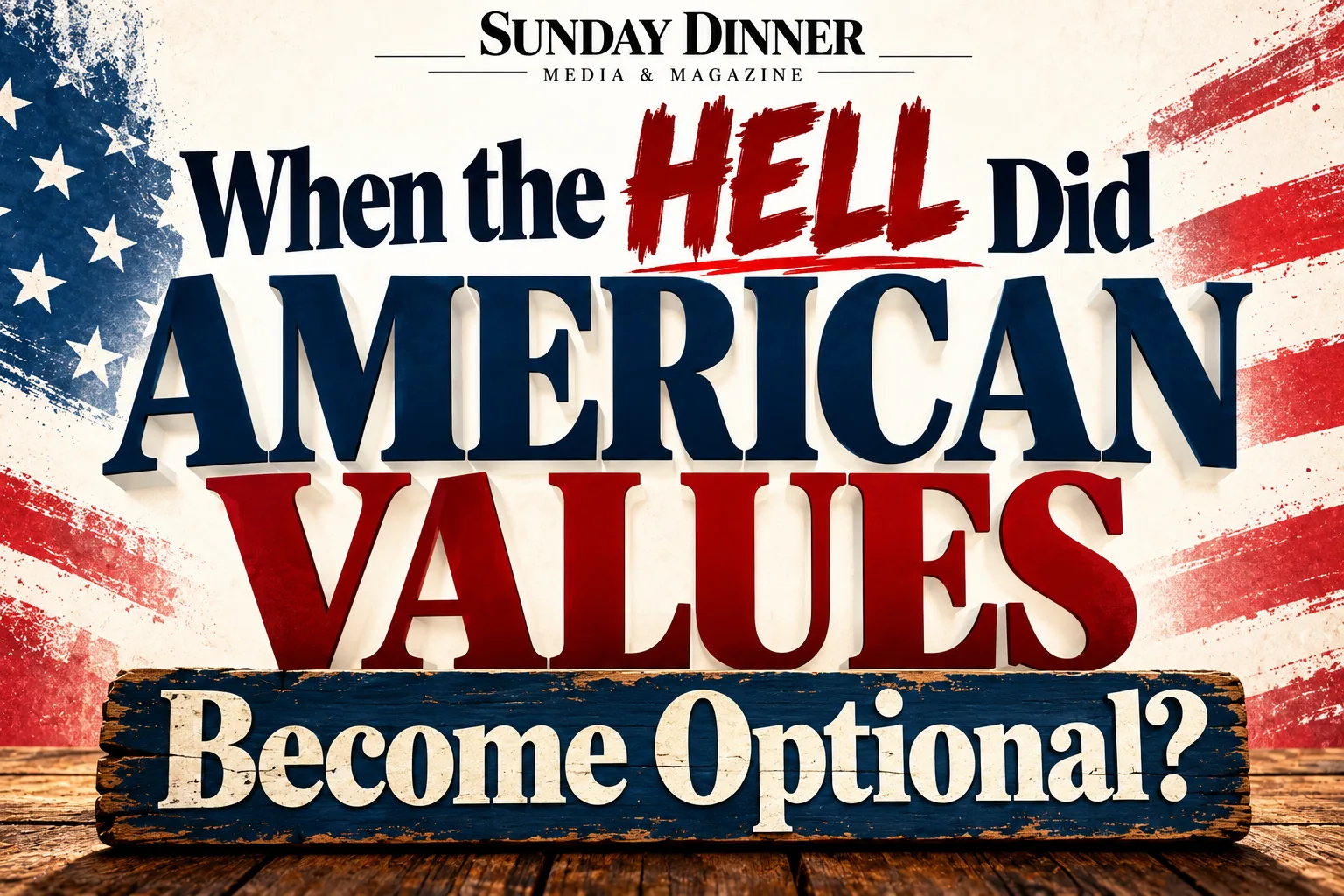
Those lessons come back to me when I hear people invoke “American values.” The phrase appears in campaign speeches, arguments about families, and judgments about who belongs in this country. People use it to claim moral authority over their neighbors.
But a value has to mean something beyond its usefulness in an argument.
It has to govern what we accept from people we support.
At an October 25, 2026, rally in Port Huron, Michigan, President Donald Trump discussed Senator Jon Husted’s physique before turning his attention to Nicki Minaj. He described her as having a “beautiful ass” and asked her to stand. The crowd applauded. 1
That applause is part of the story.
If you are outraged by what children might encounter in schoolbooks, classrooms, or entertainment—and invoke family values to condemn other people’s relationships—explain the standard you apply when your president publicly describes another man’s ass.
Where is that concern about what children might hear? Where is the restraint you demand from teachers, entertainers, and people whose lives you disapprove of?
And when a married president publicly praises a married woman’s ass, where are the family values you insist everyone else must uphold?
You cannot make protecting children your argument against everyone else, then abandon that concern when your own leader takes the microphone.
The question is why your outrage stops where your political loyalty begins.
If you condemn conduct from others but excuse comparable conduct from someone you support, that is hypocrisy. Calling it a joke does not resolve the double standard. Applauding it makes the contradiction visible.
I teach my son to respect women, exercise judgment, and recognize other people’s boundaries. Those expectations do not disappear because someone is popular, wealthy, or powerful. They belong in public leadership, too.
Would you accept those words from a politician you oppose? Would you welcome them if they were directed at your wife, your mother, or someone else you love?
Women deserve respect regardless of their relationship to us. But those questions expose how quickly people recognize disrespect when it becomes personal—and how readily they excuse it when accountability becomes politically inconvenient.
If these are principles you truly stand for, stand by them when your president tests them.
Otherwise, what are children learning—that respect matters, or that the right person can get away with disrespect?
That same test applies to support for law enforcement.
According to the Justice Department, approximately 140 police officers were assaulted during the January 6, 2021, attack on the Capitol. They were doing their jobs while Congress carried out the certification of a presidential election. 2
On May 30, 2024, a New York jury convicted Trump of 34 felony counts of falsifying business records. On September 6, the National Fraternal Order of Police endorsed him for president over Kamala Harris, a former prosecutor and California attorney general. That endorsement came after both January 6 and the criminal verdict. 345
The FOP said it considered the candidates’ records, public-safety priorities, and engagement with its endorsement process. Trump completed its questionnaire and met with its committee. Harris’s campaign submitted a letter but did not provide a comparable meeting. 4
Those were its stated reasons. They do not resolve the contradiction.
An organization representing law enforcement chose a candidate whom a jury had convicted of 34 felonies. How did it weigh that record? What did “law and order” require of the person it endorsed?
As a Black American, I find myself asking another question: if a Black candidate named Jefferson had the same record, would the same organization—and the same voters—have extended the same consideration?
We cannot know the outcome of a hypothetical election. But each reader can examine whether their own judgment would remain the same.
On January 20, 2025, Trump issued sweeping pardons and commutations for January 6 offenses. The clemency extended to people convicted of assaulting law enforcement officers. 67
The FOP subsequently joined the International Association of Chiefs of Police in expressing opposition to clemency for people convicted of killing or assaulting officers. That objection was necessary. It also demonstrated that endorsing someone does not require surrendering the ability to challenge their decisions. 8
Citizens owe the country that same independence.
If assaulting an officer is unacceptable, the attacker’s political allegiance cannot make it acceptable.
Respect for women also requires more than defending the women in our own families or political circles.
In May 2023, a civil jury found Trump liable for sexually abusing E. Jean Carroll and for defaming her, awarding her $5 million. Trump denied the allegations. This was a civil finding, not a criminal conviction. It was an established jury finding that voters had the opportunity to consider. 9
Anyone who insists that character matters should be prepared to explain how that finding factors into their judgment of a leader.
Protecting children requires the same willingness to examine uncomfortable evidence. Trump’s past friendship with Jeffrey Epstein is documented. That association warrants scrutiny; it does not, by itself, establish participation in Epstein’s crimes. Specific allegations must be examined on their evidence. 10
The obligation is to pursue the truth wherever the evidence leads.
We should not invent guilt. We should not dismiss established findings. And we should not decide whether a question deserves investigation by checking the political affiliation of the person involved.
Accountability that stops at the people you support is selective protection.
These examples lead to an expectation that reaches far beyond one president: people entrusted with leadership should bring dignity to the responsibility.
That includes senators, members of Congress, state legislators, judges, lawyers, prosecutors, police officers, and community leaders. Their positions give them influence over other people’s lives. How they carry themselves helps establish what others believe is acceptable.
Actors can portray arrogance, cruelty, or recklessness because they are performing a role. Public officials exercise real authority. Their words and decisions have consequences beyond the scene, the broadcast, or the applause.
Leadership requires judgment about what to say, how to say it, and what purpose it serves. A leader should be capable of confronting wrongdoing, defending a position, and disagreeing firmly without humiliating another person.
Leadership means presenting a vision people can understand, trust, and help carry forward. Conduct gives that vision credibility.
If you ask people to respect the law, demonstrate respect for it. If you ask them to take responsibility, accept responsibility yourself. If you speak about dignity, show it in how you treat people who cannot advance your career or reward your loyalty.
A polished appearance cannot do that work for you. An expensive suit, a luxury meal, or a prominent title tells us little about your honesty or judgment.
Dignity becomes visible in your choices: how you use authority, how you respond to criticism, and whether your principles survive an inconvenient test.
Government should not operate like an endless television drama, with every confrontation setting up the next episode. Citizens need competent decisions, clear explanations, and work that improves their lives.
A title gives someone a position. Their conduct determines whether they provide leadership worthy of it.
The matters that keep me awake are familiar to many families.
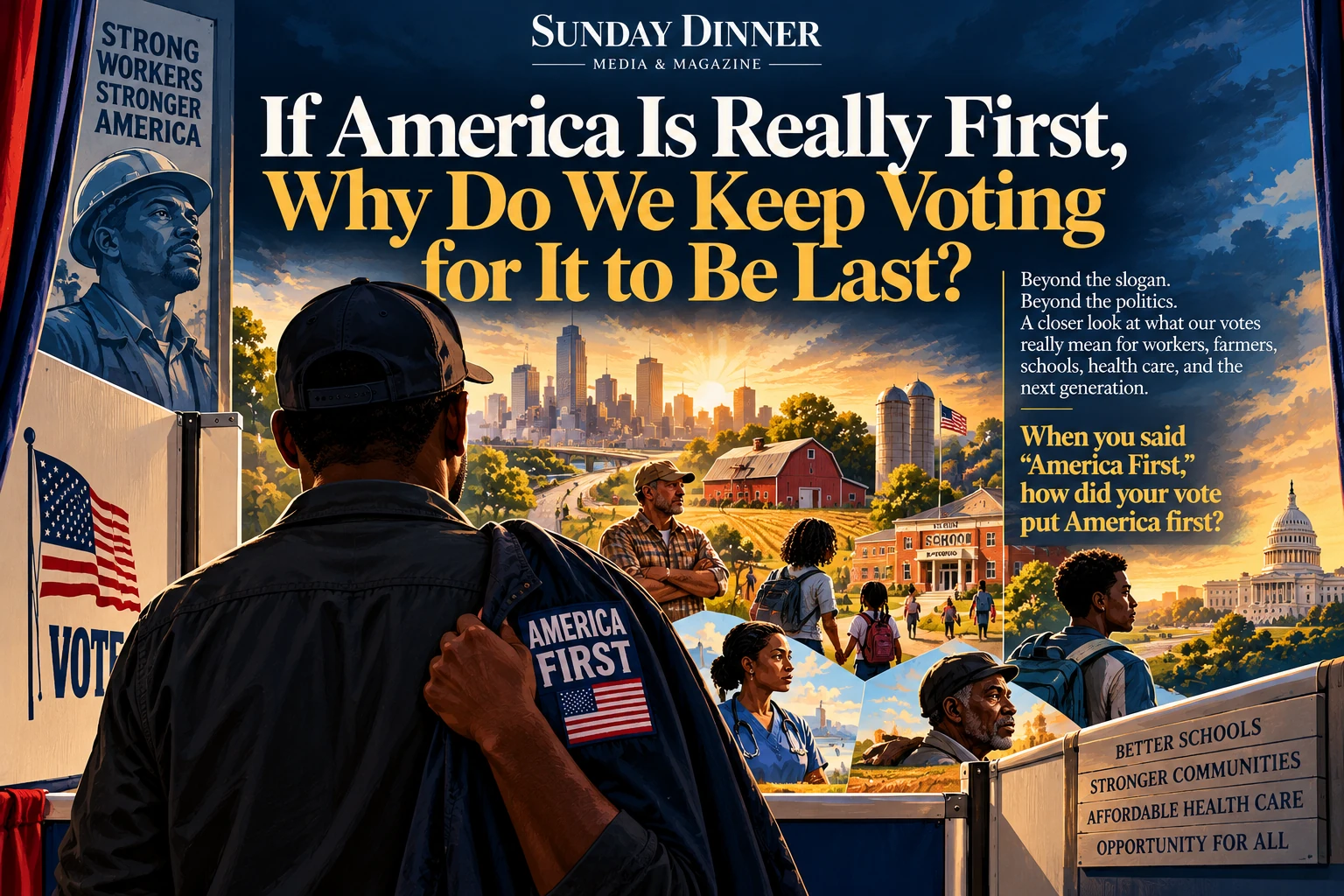
I think about my wife’s health, my son’s health, and my own. I think about education, groceries, insurance, and bills that arrive regardless of what happened in Washington that day. I want safe roads and bridges. I want my neighbors’ children to have opportunities alongside my own.
Those responsibilities give me a practical way to judge leadership. I want to know what officials propose, what they vote for, what their decisions cost, and whom those decisions help or harm.
A performance of outrage cannot pay a household bill. Giving people someone to resent cannot substitute for addressing a problem.
At home, I am also responsible for the example I set.
My son learns from what I tell him. He learns from what I accept.
If I teach him not to lie, I owe him consistency when someone I admire lies. If I teach him to respect women, I cannot applaud public disrespect because it comes from someone powerful. If I teach him that actions have consequences, I cannot excuse those actions when the person responsible belongs to my preferred group.
Children notice exceptions. They notice when the rules become flexible for someone adults want to protect.
We can teach them that people make mistakes, acknowledge them, and take responsibility. Or we can teach them that sufficient money, status, and influence allow someone to escape standards everyone else must meet.
We help decide which lesson they receive.
That responsibility extends beyond the next election. The conduct we normalize shapes what future generations expect from leadership—and what they believe they can get away with themselves.
How did we reach a point where the appearance of success can matter more than the conduct behind it?
We recognize theft when someone robs a bank or takes something from a store. But when wrongdoing involves a briefcase, an impressive title, or complicated financial arrangements, do we apply the same judgment? If someone fraudulently takes public money, does their wealth make the taking more acceptable?
The circumstances, evidence, and legal offenses must be examined carefully. The underlying principle should remain recognizable: money and status should not purchase an exemption from accountability.
That question reaches those of us deciding whom to admire, defend, and elect.
What happens to our principles when we encounter evidence we would readily accept against someone else, yet refuse to consider against someone we support? What are we protecting when we insist we did not hear the words, did not see the conduct, or cannot trust any finding that challenges our allegiance?
My grandmother had a way of describing that refusal. She called it wearing “summertime glasses.”
The glasses were painted with roses, green grass, a blue sky, and sunshine. No matter how cold or frosty the world outside became, the person wearing them saw summer.
The glasses did not change the weather. They changed what the wearer was willing to see.
We can become so attached to a person, a party, or a promise that we protect the picture instead of examining the conditions around us. We make excuses. We move the standard. We dismiss the evidence.
Then, when the glasses fall away, we wonder how things became so bad.
The conditions did not begin when we finally acknowledged them.
Taking off those glasses means accepting that someone we supported can do wrong. It means recognizing that an opponent can be right about a particular issue. It means judging conduct without first checking whether accountability would benefit our side.
Religious identity does not settle that test. A person can profess faith and fail to practice honesty, compassion, or responsibility. Another person can claim no religious affiliation and demonstrate those qualities every day.
The same is true of patriotism. Calling something “American values” does not establish its worth. We have to explain the principle, practice it, and apply it consistently.
We can begin with the standards we expect in our homes. Tell the truth. Respect other people and their boundaries. Take responsibility for what you do. Help where you can. Accept correction when you are wrong.
Then carry those expectations into public life.
I want my son to succeed. I want him to have opportunities, comfort, and choices. I also want him to understand that success brings responsibility for how he treats people and uses what he has.
If our idea of success becomes having enough money or power to do whatever we want, we are teaching him that principles become optional once a person becomes important enough.
The values my parents passed to me were meant to remain with me wherever I went. They applied when following them was easy and when following them cost something.
That is what makes them worth passing on.
Do we value wealth and power because they allow someone to escape the rules—or do we value principles strongly enough to hold even the powerful accountable?
When the facts challenge someone you support, will you hold them to your principles—or put the summertime glasses back on?
Sources & References (61)
Trump’s October 25, 2026, rally remarks
- Primary record: Roll Call / Factba.se, “Speech: Donald Trump Holds a Midterm Political Rally in Michigan — October 25, 2026.”
- URL: https://rollcall.com/factbase/trump/transcript/donald-trump-speech-political-rally-port-huron-michigan-october-25-2026/
- Corroborating report: PEOPLE, “Trump Compliments Nicki Minaj’s ‘Beautiful Ass’ as White House Teases Her as Next Press Secretary,” updated October 26, 2026.
- URL: https://people.com/trump-compliments-nicki-minaj-s-beautiful-ass-as-white-house-teases-her-as-next-press-secretary-12195093
- Supports: Rally date and location, remarks about Husted and Minaj, request that Minaj stand, and applause.
Police officers assaulted on January 6
- Publisher: U.S. Department of Justice.
- Title: “Attorney General Merrick B. Garland Statement on the Second Anniversary of the January 6 Attack on the Capitol.”
- Date: January 2023.
- URL: https://www.justice.gov/archives/opa/pr/attorney-general-merrick-b-garland-statement-second-anniversary-january-6-attack-capitol
- Supports: Approximately 140 officers assaulted, including Capitol Police and Metropolitan Police officers.
Trump’s 34-count felony conviction
- Publisher: Manhattan District Attorney’s Office.
- Title: “D.A. Bragg Announces 34-Count Felony Trial Conviction of Donald J. Trump.”
- Date: May 30, 2024.
- URL: https://manhattanda.org/d-a-bragg-announces-34-count-felony-trial-conviction-of-donald-j-trump/
- Supports: Jury conviction on 34 counts of first-degree falsifying business records.
FOP endorsement and stated reasoning
- Publisher: National Fraternal Order of Police.
- Title: “FOP Endorses Trump!”
- Date: September 6, 2024.
- URL: https://fop.net/2024/09/fop-endorses-trump/
- Supports: Endorsement, candidate evaluation, questionnaire, campaign letter, and meetings.
Endorsement context and Harris’s professional background
- Publisher: WUNC.
- Title: “Fraternal Order of Police endorses Trump before his Charlotte speech.”
- Date: September 6, 2024.
- URL: https://www.wunc.org/2024-09-06/fraternal-order-of-police-endorses-trump-before-his-charlotte-speech
- Supports: Endorsement of Trump over Harris and the contrast with her prosecutorial background.
January 6 clemency proclamation
- Publisher: The White House.
- Title: “Granting Pardons and Commutation of Sentences for Certain Offenses Relating to the Events at or Near the United States Capitol on January 6, 2021.”
- Date: January 20, 2025.
- URL: https://www.whitehouse.gov/presidential-actions/2025/01/granting-pardons-and-commutation-of-sentences-for-certain-offenses-relating-to-the-events-at-or-near-the-united-states-capitol-on-january-6-2021/
- Supports: Scope and terms of the clemency action.
Clemency for defendants who assaulted officers
- Publisher: Just Security.
- Title: “What Just Happened: Trump’s January 6 Pardons and Assaults on Law Enforcement.”
- URL: https://www.justsecurity.org/106689/january-6-pardons-statistics/
- Supports: Analysis of pardoned defendants convicted of assaults against law enforcement.
Joint police organizations’ response
- Authors: International Association of Chiefs of Police and Fraternal Order of Police.
- Title: “Joint IACP-FOP Statement on the Recent Presidential Pardons.”
- Date: January 21, 2025.
- Accessible reproduction: https://news.jgpr.net/2025/01/21/reposting-joint-iacp-fop-statement-on-the-recent-presidential-pardons/
- Supports: Opposition to pardons and commutations for people convicted of killing or assaulting officers.
- Context: The statement criticized clemency actions by both the Biden and Trump administrations; it was not exclusively a statement about Trump. John Guilfoil Public Relations
E. Jean Carroll civil verdict
- Publisher: Associated Press, published by PBS News.
- Title: “Jury finds Trump liable for sexual assault and defamation in E. Jean Carroll case.”
- Date: May 9, 2023.
- URL: https://www.pbs.org/newshour/politics/jury-finds-trump-liable-for-sexual-assault-and-defamation-in-e-jean-carroll-case
- Supports: Civil jury finding of sexual abuse and defamation, $5 million award, and Trump’s denial.
Trump–Epstein relationship
- Publisher: PBS News.
- Title: “The facts and timeline of Trump and Epstein’s falling out.”
- URL: https://www.pbs.org/newshour/politics/the-facts-and-timeline-of-trump-and-epsteins-falling-out
- Supports: Documented past social relationship and accounts of its ending. The article does not treat association as proof of participation in Epstein’s crimes.
Author’s firsthand material
Clarence C. Mitchell’s account of his upbringing, parenting practices, household concerns, and his grandmother’s “summertime glasses” metaphor. These are personal recollections, not independently sourced historical claims.


The conversation is open
Be the first reader to add a thoughtful response.