As a child, I never realized that my parents didn't have much. My father was a construction worker, and my mother worked for the New York Department of Education. During the winter, my dad was often laid off. I didn't understand what that meant for our household. I just knew that when the snow came and the weather turned cold, he was home.
Still, my parents found a way to make Christmas feel abundant for me and my family. I remember going to bed on Christmas Eve with nothing under the tree, then waking up to find it full of gifts. I could see the presents. I couldn't see the planning that put them there.
THE GIFTS WE DIDN'T SEE COMING
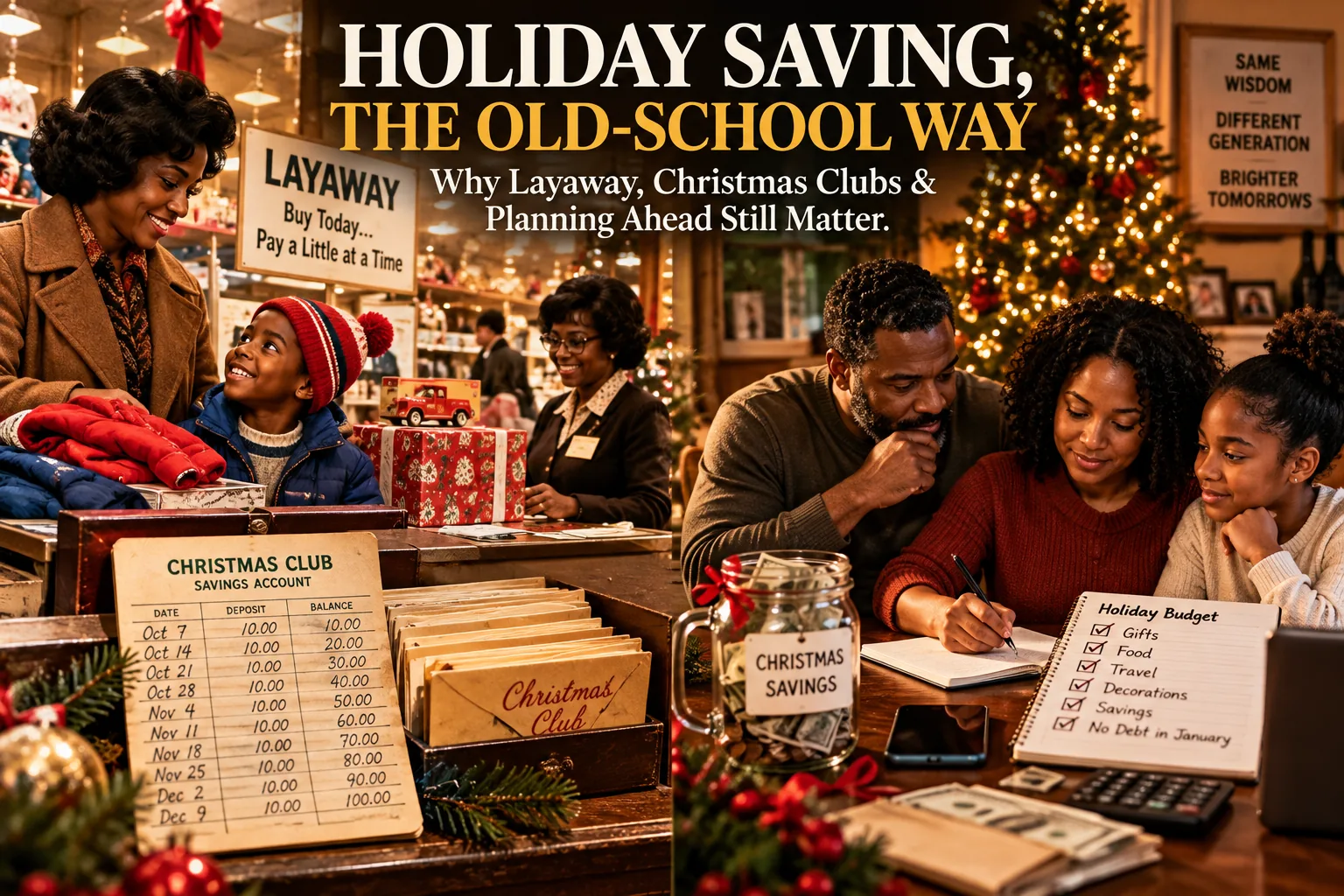
My mother would take me to Alexander's, have me try on clothes, and bring them to the counter. I thought we were shopping. We were, but the clothes didn't come home with us that day. She was putting them on layaway.
She would put down a few dollars, then return with another $5 or $10 when she could. The store held the items while she paid toward them. By the time Christmas came, she had done much of the work of buying those gifts without my ever knowing it.
My parents also used a Christmas Club account. Starting in January, they would put aside what they could: sometimes $5, sometimes $2, sometimes $20 when things were better. Those small deposits had a purpose. By the time the holidays approached, they had money set aside for gifts instead of having to find it all at once.
One day, my Aunt Alma told me that other families planned this way, too. Some used layaway. Some used holiday savings accounts. Some participated in *susus*, community savings circles in which members contributed regularly and took turns receiving the collected money. Different arrangements came with different responsibilities, but I began to understand the principle my parents were practicing.
Christmas morning started long before Christmas morning.
THE OLD LESSON IN A NEW CHECKOUT LINE
The tools available today are different. Some stores still offer layaway, but the terms vary. A holiday club account or a separate savings account can help you set money aside before you spend it. At checkout, you may also see a buy-now-pay-later offer that lets you take an item home immediately and pay in installments.
Those choices are not interchangeable. With traditional layaway, you generally receive the item after paying for it. With buy-now-pay-later, you receive it first and take on a repayment obligation. Before choosing either one, it pays to look at the full price, payment dates, possible fees, and what happens if you cancel, return the item, or miss a payment.
My parents' method wasn't magic. They still had to make choices, and there were times when money was tight. What I carry from them is the habit of deciding what we could afford, starting early, and giving small amounts of money a job.
If you have room in your budget, that might mean moving a few dollars into a separate holiday account each payday. If you use layaway, check its fees and cancellation terms first. If you join a savings circle, make sure you understand the arrangement and trust the people responsible for the money. And if an installment offer makes a purchase look easier, check whether its future payments will still fit alongside your regular bills.
The goal isn't to recreate the Christmases I remember or to fill a tree at any cost. It's to make room for joy without carrying more than your household can bear into the new year.
I didn't know it then, but every small payment my parents made was part of the gift. They were preparing for us, week after week, in ways we couldn't see.
THE SUNDAY DINNER QUESTION
What money lesson did your family teach you during the holidays—and is there a part of it you still use today?
Sources & References (8)
## SOURCES & REFERENCES
- [Original personal essay, Uncle Clarence BBQ Sunday Dinner Magazine, September 28, 2025](https://uncleclarencebbq.com/blogs/sunday-dinner-magazine/holiday-saving-tips-how-old-school-layaway-christmas-clubs-still-work-today). Source for the author's family recollections and the earlier version of this story.
- [Federal Trade Commission, “Buy Now, Pay Later, Rent-to-Own, Lease-to-Own, and Layaway”](https://consumer.ftc.gov/articles/buy-now-pay-later-rent-own-lease-own-and-layaway). Guidance on comparing payment arrangements and their terms.
- [Federal Deposit Insurance Corporation, “Savings Are Great for Short-Term Goals Too”](https://www.fdic.gov/consumers/consumer/news/september2018.html). Explanation of holiday club accounts and possible early-withdrawal penalties.
- [Consumer Financial Protection Bureau, “What is a Buy Now, Pay Later loan?”](https://www.consumerfinance.gov/ask-cfpb/what-is-a-buy-now-pay-later-bnpl-loan-en-2119/) and [“Do Buy Now, Pay Later loans have fees?”](https://www.consumerfinance.gov/ask-cfpb/do-buy-now-pay-later-bnpl-loans-have-fees-en-2118/). Explanation of installment borrowing and possible late fees.
*Editorial note: This personal essay was first published by Uncle Clarence BBQ Sunday Dinner Magazine in 2025. It has been edited for Sunday Dinner Media, with the current payment-options guidance checked against the sources above.*
© 2026 Sunday Dinner Media. All rights reserved.
*The table is always open. The conversation matters.*



The conversation is open
Be the first reader to add a thoughtful response.